• Skip to main content
  • Skip to primary sidebar
  • Skip to footer

Pacific Medical Law

A founding member of BILA

Law, Justice And Compassion | Call Today

1-604-685-2361

  • Home
  • Team
  • Injuries
    • Birth Injury
    • Brain Injury
    • Cerebral Palsy
    • Infant & Child Injuries
    • Spinal Cord Injuries
  • Janna Epp Bursary
  • Cases Won
  • Publications
  • Blog
  • Patient’s Corner
  • In The News
  • Contact
  • Home
  • Team
  • Injuries
    • Birth Injury
    • Brain Injury
    • Cerebral Palsy
    • Infant & Child Injuries
    • Spinal Cord Injuries
  • Janna Epp Bursary
  • Cases Won
  • Publications
  • Blog
  • Patient’s Corner
  • In The News
  • Contact
Call
Contact
Blog

Medical Malpractice

Defenses to a Medical Malpractice Claim – Navigating the Minefield

Thursday, March 4, 2021 By Andrea Donaldson

This is the fourth article in our 8 part series published in the Verdict law journal on medical malpractice litigation. Even if a plaintiff has obtained some expert evidence critical of the defendant’s care, this will not necessarily lead to a finding of fault. In this article, Andrea Donaldson reviews a number of common defenses to a claim of that the defendant breached the standard of care, namely that the defendant followed an approved practice, that he or she followed one of two accepted schools of thought, or that he or she exercised his or her clinical judgment. The analyses of the courts as to how these defenses apply help to illustrate why so few medical malpractice cases that go to court are decided in favor of the plaintiff.

PASSIVE VS. ACTIVE DEFENSES

As discussed in our previous articles, a plaintiff in a medical malpractice action must prove all necessary elements of a claim to succeed: the existence of a duty of care, that a breach of that duty occurred, and that the injury in question was caused by the defendant’s breach.

Commonly, a plaintiff will have adduced some evidence on each element of the claim, and a defendant will attempt to discredit the plaintiff’s case by introducing competing expert evidence and attacking the plaintiff’s claim by techniques such as cross- examination. 1 If a plaintiff has adduced no evidence on one or more essential elements, the defendant can take steps to have the case dismissed (either by bringing a summary trial application or a non-suit motion at the conclusion of the plaintiff’s case) as the plaintiff has not made out a prima facie claim. These situations can be classified as “passive” defenses as they involve attacking the plaintiff’s claim by undermining one or more necessary elements. 2

So called “active” 3 defenses to a claim of a breach of the standard of care include:

a)  That the defendant followed an approved practice that is generally followed by members of the profession;
b)  That the defendant followed one of two accepted schools of thought; and
c)  That the defendant exercised his or her clinical judgment and therefore cannot be at fault.

Often, a defendant in a medical malpractice action will rely on one of these active defenses to defend his or her conduct. Each of these active defenses is discussed in more detail below.

APPROVED PRACTICE

The defense of approved practice involves an attempt to prove that the practice or procedure followed was generally approved of and used by members of the defendant’s profession at the time in question, and therefore ought not to be considered negligent. 4 For many years, the scope of the defense of approved practice was unclear, with some cases finding that it was conclusive evidence of lack of negligence 5 and others finding that it was only a rebuttable presumption. 6  The Supreme Court of Canada addressed the issue in ter Neuzen v. Korn. 7

Ter Neuzen involved a patient who had contracted HIV through infected sperm used in an artificial insemination (AI) program. The patient claimed that the defendant physician breached the standard of care by failing to be aware of the risk of HIV infection from AI and failing to screen donors for sexually transmitted diseases. The defendant led expert evidence that his practice was in keeping with the practice across Canada, and specifically that his process of recruiting and screening donors was in accordance with national standards. At the time in question, AI was not seriously considered by the general medical community to put anyone at risk of being infected with HIV.

The court confirmed the rule that “[i]t is generally accepted that when a doctor acts in accordance with a recognized and respectable practice of the profession, he or she will not be found to be negligent.” 8  This is because the medical profession as a whole is assumed to have adopted procedures which are in the best interests of patients and are not inherently negligent, and courts do not ordinarily have the expertise to tell professionals that they are not acting appropriately in their field.

The court, however, made room for certain situations where the standard practice itself may be found to be negligent. Writing for the court, Justice Sopinka stated that “where the standard practice is ‘fraught with obvious risks’ such that anyone is capable of finding it negligent, without the necessity of judging matters requiring diagnostic or clinical expertise” 9 or where “the practice does not conform  with basic care which is easily understood by the ordinary person who has no particular expertise in the practices of the profession,” 10  it is open to the court to find the practice, and therefore the defendant, negligent. These two conditions – that the practice is fraught with risk and that this can be easily understood by an ordinary person – rarely appear together and lead to a finding that an accepted practice is negligent. 11

Anderson v. Chasney 12 was cited in ter Neuzen as an example of where the standard practice of the profession was found to be negligent. In that case, a young boy died of suffocation from sponges left inside his nasopharynx following tonsilladenoidectomy surgery. The sponges used during the surgery did not have strings attached so that they could easily be retrieved, even though that product was available. The surgeon presented evidence at trial that it was not his practice, nor the practice of the hospital, to use sponges with strings or to have nurses count the sponges to ensure removal, and the case was dismissed. The Manitoba Court of Appeal reversed the trial decision, finding that the surgeon took an unnecessary risk by failing to use one of the two methods available.  In the court’s view, these precautions were within the understanding of the trier of fact and were sufficient to determine negligence. The court in ter Neuzen cited Anderson as an example of a case “where there are obvious existing alternatives which any reasonable person would utilize in order to avoid a risk” 13 and where the failure to adopt such measures could result in the finding of negligence notwithstanding  that the defendant followed the prevailing practice.

To rely on a defense of approved practice, the defendant must compare the treatment or conduct in question to the knowledge that ought to be reasonably possessed at the time, and the court must not judge the defendant too harshly with the benefit of hindsight. 14 Therefore, a procedure that was performed several years ago will not be viewed in light of medical advances or changes in practice that have occurred between the time of treatment and the time of trial, but a doctor who fails to keep up with advances may be found negligent. In McCormick v. Marcotte, 15 the plaintiff suffered a broken femur following a motor vehicle accident. He was taken to hospital and seen by the defendant physician. The defendant consulted an orthopedic surgeon who advised a procedure of skin traction followed by insertion of an intramedullary nail. The defendant was not qualified to perform the recommended surgery and performed another procedure that had since fallen into disfavour. The plaintiff suffered an injury which was a known risk of the obsolescent procedure performed, and the defendant was found negligent.

To rely on the approved practice defense, the onus is on the defendant to show that his or her practice conformed to that approved by the profession at the time. Expert evidence is essential to establish the defense, which is open to the plaintiff to rebut. 16

TWO SCHOOLS OF THOUGHT

The “two schools of thought” defense is closely related to the approved practice defense and provides a scope for disagreement and differing views or approaches among doctors. The rationale for the defense, as stated by the Supreme Court of Canada in Lapointe v. Hopital Le Gardeur, 17 is that courts do not have the expertise to choose between two schools of thought which are well-founded medically and seem equally reasonable. A situation involving two schools of thought, however, does not necessarily arise simply because a defendant adduces some evidence contradicting the plaintiff’s evidence on the standard of care. Expert evidentiary conflicts occur in almost every case, and just because the evidence is divided does not mean the plaintiff must fail. 18

The Maynard v. West Midlands Regional Health Authority 19 decision of the House of Lords is often cited for the proposition that “in the realm of diagnosis and treatment, negligence is not established by preferring one respectable body of professional opinion to another.” 20  This is often argued by defendants to necessitate dismissal of an action where there is disagreement amongst the experts as to whether the defendant breached the standard of care.

Maynard was first considered in Canada in Brain v. Mador. 21 At trial, the defendant urologist was found negligent in performing a vasectomy on the plaintiff too soon after the plaintiff had an episode of epididymitis.  The defendant,  as well as three other highly qualified urologists, gave evidence at trial. Conflicting opinions were expressed by the expert witnesses as to whether a reasonably careful urologist should have operated so soon after the infection.

The defendant appealed on the basis that the trial judge erred in preferring one responsible body of professional opinion over another and relied on the Maynard decision. The Court of Appeal noted that Maynard goes on to state that “[f]ailure to exercise the ordinary skill of a doctor is necessary” 22 to establish that the defendant breached the standard of care, which is consistent with the test applied in Canada. The court in Brain noted that professional opinions expressed have an important bearing on the determination of whether the standard of care has been met, but it is for the trier of fact to weigh the conflicting testimony and ultimately  assess the weight to be given to the evidence.

The law on competing schools of thought was thoroughly dis- cussed by the Ontario Superior Court in Crawford v. Penney. 23 The case involved a claim for injuries sustained by the plaintiff during her birth. The pregnancy of the plaintiff’s mother, Ms. Crawford, had been managed by Dr. Penney. During the pregnancy, Ms. Crawford experienced rapid weight gain, elevated blood pressure, and she was noted to have protein in her urine. Dr. Penney also managed Ms. Crawford’s labour and delivery, which was induced with oxytocin. After the baby’s head was delivered at 9:55 pm, shoulder dystocia was encountered. Birth did not occur until 10:10 pm, resulting in 15 minutes of oxygen deprivation to the baby. The trial judge found that the baby suffered hypoxic ischemic encephalopathy caused by shoulder dystocia due to excessive birth weight caused by untreated diabetes in pregnancy, and that the delay during delivery resulted in a period of acute near-total asphyxia.

The trial judge found that Dr. Penney’s overall management of the pregnancy involved a failure to properly  assess the risk factors associated with the pregnancy as well as an unrealistic view of his own ability to handle its management, including delivery. The judge concluded that he had breached the standard of care notwithstanding expert evidence led on behalf of Dr. Penney that he had acted in accordance with accepted practice.

The trial judge found that expert evidence is subject to the same process of being weighed and assessed against all the other evidence as evidence from lay witnesses is, and that expert evidence that the defendants acted in accordance with the standard of care does not necessitate dismissal of the action. The court’s function is to evaluate conflicting testimony, including expert testimony, and determine the facts he or she accepts by proof or inference. Expert evidence must be weighed in accordance with such findings of fact and in accordance with consideration of the reliability of such opinion evidence. The court found that there is no necessary dismissal of a medical negligence claim simply because honest and competent experts disagree over a doctor’s diagnosis and treatment. 24

Unfortunately, there are a number of BC decisions that suggest that as long as the defendant adduces some evidence to the contrary, then they have established competing schools of thought and the plaintiff’s claim must fail. Brimacombe v. Mathews 25 involved an infant who had suffered a hypoxic ischemic injury during labour and delivery. The trial judge found the defendant, Dr. Mathews, negligent for failing to apply traction to hasten the birth of the infant plaintiff during a breech vaginal delivery. The BC Court of Appeal did not agree, finding that the decision to apply traction or not represented two competing schools of thought among the plaintiff and defense experts, and ordered a new trial on this and other grounds.

Fairley v. Waterman 26 involved the interpretation of fetal heart monitoring strips and what needed to be done in response. The primary issue in the case was whether there were earlier signs of compromise, or at least sufficient uncertainty about the baby’s condition, that required the defendant to intervene earlier than he did. The court found that the plaintiff had, at best, established that there are two schools of thought in respect of the interpretation of the fetal heart monitoring strips and the required action, and dismissed the plaintiff’s claim:

In circumstances where there are two competing and acceptable schools of thought the law is quite clear that adherence to either school (i.e. non-intervention versus intervention) is an acceptable standard of care, and a simple clinical misjudgment cannot amount to negligence. 27

More recently, O’Connor v. Wambera 28 was a case involving a teenage girl who suffered a hemorrhagic stroke due to an undiagnosed arterio venous malformation (“AVM”). She brought a claim against her pediatric neurologist, alleging that she was negligent in failing to order brain imaging which would have diagnosed the AVM. The court accepted that the opinions of the defendant’s experts, who opined that her differential diagnosis and follow up was appropriate, “represented one accepted school of thought as to the standard of care,” 29 and therefore concluded that the defendant had met the requisite standard.

The case of Kita v. Braig 30 offers a genuine example of a defendant adhering to one of two acceptable schools of thought. The plaintiff, Mr. Kita, suffered from chronic sinusitis, and when no conservative treatment was successful, he underwent an antrostomy – the making of an opening between the sinus and the nose. One of the known risks of antrostomy is a hemorrhage. If hemorrhage does occur, packing or cautery is performed. If these fail to control the hemorrhage, the next step is to perform surgery to stop the flow of blood to the site of the hemorrhage.

In Mr. Kita’s case, the antrostomy resulted in significant hemorrhaging which was not alleviated by packing or cautery. The defendant Dr. Braig, an otolaryngologist, recommended ligating the carotid artery to stop the flow of blood to the site of the hemorrhage, which Mr. Kita accepted. Dr. Braig ligated the carotid artery approximately 1.5 cm above the carotid bulb, leaving a stump of the artery. Following the procedure, Mr. Kita suffered a stroke.

At trial, the court accepted Mr. Kita’s contention that the most probable source of the embolus causing the stroke originated in the stump of his external carotid artery following the ligation. Mr. Kita’s expert neurosurgical evidence was that the carotid artery should have been ligated flush to the bulb, and had that been done, the stroke would not have occurred. Conversely, Dr. Braig adduced expert evidence supporting his method as that which was commonly practiced within the otolaryngology community.

The BC Supreme Court found that the conflicting medical evidence as to the appropriate standard of care originated partly from the different objectives of the specialties of neurosurgery and otolaryngology. The otolaryngology community performed the external carotid ligation procedure with the goal of restricting the supply of blood to the source of the hemorrhage.  The neurosurgical community performed the procedure to inhibit clot formation in a compromised vascular system. Both specialties were unaware of the standards of the other and, in particular, the practice of ligating flush to minimize risk of clot formation. The court dismissed the plaintiff’s claim, finding that the defendant acted reasonably and complied with a respectable school of thought as to how to best perform the procedure.

A court may find that divergent medical opinions amongst experts do not reflect opposing schools of thought, but different points on a continuum of a single school of thought or reasonable practice. 31 In many cases, the trial judge will prefer the evidence of one expert over the other in determining what the standard of care is, rather than accepting the evidence of both sides as reflective of equally reasonable but different standards of care.

CLINICAL JUDGMENT

The Supreme Court of Canada has repeatedly held that medical practitioners are not to be held liable for errors of clinical judgment that are distinguishable from professional fault. 32

A poor outcome does not mean that any negligence occurred as a doctor is not expected to be a guarantor of success, and cannot be held liable for an exercise of clinical judgment even if his or her judgment is wrong.

In Brimacombe, discussed above, the BC Court of Appeal found that the trial judge’s finding of negligence against the defendant could not stand as the judge had equated the failure to apply traction to expedite delivery of the infant plaintiff with carelessness, whereas on appeal, the court found that this was more accurately described as an error of judgment that could not attract liability. Citing the Supreme Court of Canada in Wilson v. Swanson, 33 the Court of Appeal noted that “an error in judgment has long been distinguished from an act of unskillfulness or carelessness… the honest and intelligent exercise of judgment has long been recognized as satisfying the professional obligation.” 34

However, just because an error involved the exercise of judgment does not completely shield a doctor from liability. As stated by the House of Lords in Whitehouse v. Jordan 35:

Merely to describe something as an error of judgment tells us nothing about whether it is negligent or not… it depends on the nature of the error. If it is one that would not have been made by a reasonably competent professional man professing to have the standard and type of skill that the defendant held himself as having, and acting with ordinary care, then it is negligent. If, on the other hand, it is an error that a man, acting with ordinary care, might have made, then it is not negligence. 36

In most cases, the success of a clinical judgment defense hinges on whether or not the defendant obtained all necessary information, or availed him or herself of all necessary resources before exercising his or her judgment.

In Williams v. Bowler, 37 the plaintiff, Ms. Williams, had long-standing headaches and abdominal pain, as well as psychological difficulties and prescription drug abuse. She attended the hospital on multiple occasions and with different complaints and requests for pain control medication, leading doctors to question whether she was drug seeking.

On March 16, 1993, Ms. Williams was seen by Dr. Bowler for headaches following a bar room brawl the previous week in which she hit her head on a cement pillar. Over the next few days, Ms. Williams made repeated visits to the hospital emergency department with more severe headaches associated with other symptoms, including nausea, vomiting, blurry vision, and a “wild looking” presentation atypical of her usual neatly groomed appearance. On March 22, she was admitted for treatment of migraine and dehydration. A lumbar puncture three days later revealed the presence of red blood cells which could be due to viral meningitis, self-limiting subarachnoid hemorrhage, or a 30% chance of a life threatening condition such as a leaking or ruptured aneurysm. On March 31, she was discharged from hospital with a diagnosis of viral meningitis and subarachnoid hemorrhage due to head injury in the bar brawl. On April 19, she suffered a rupture of brain aneurysm, leading to permanent brain injury.

The issue before the court was whether it was a breach of the standard of care for Dr. Bowler to have failed to include leaking or ruptured aneurysm in his differential diagnosis and make an urgent referral to a neurologist. Had this occurred, appropriate investigation would have revealed the aneurysm and it would have been surgically treated in time to prevent the rupture and brain injury.

The defense asserted that Ms. Williams’ injury was the unfortunate result of the exercise of Dr. Bowler’s clinical judgment, and in the context of Ms. Williams’ complicated history, he exercised his clinical judgment reasonably with respect to the interpretation of the lumbar puncture results and could not be found negligent. The court did not agree, and concluded that in interpreting the lumbar puncture result, Dr. Bowler entered unchartered waters, and the standard of care required him to seek the input of a neurologist or neurosurgeon, and found that he was negligent for failing to do so.

Crawford, discussed above, involved an allegation that the defendant had a duty to refer Ms. Crawford to a specialist to manage her pregnancy in light of her cumulative risk factors. The trial judge agreed that the duty to refer involves a matter of judgment, but that does not mean that a court cannot examine the grounds upon which the judgment is exercised:

The proper exercise of judgment by a physician is one that is made after his/her weighing, assessing and evaluating such information as may be available. What “may” be available includes the results of tests or consultations that should have been carried out. In other words, the information upon which a judgment or decision is reached must be as complete  as is reasonably available and possible in the circumstances. 38

Negligence may be found where a doctor, exercising his or her clinical judgment, has failed to obtain all clinically significant information via tests and examinations. In Wade v. Nayernouri, 39 a patient presented to the emergency department with severe headache, nausea, dizziness, numbness, and photophobia, and was diagnosed by the defendant physician as suffering from migraine headaches. The patient was, in fact, in the early stages of subarachnoid hemorrhage and died several days later. The court found that the erroneous diagnosis alone did not determine the defendant’s liability, but found that the defendant was negligent for failing to make use of all diagnostic resources, including refer- ring the patient to a specialist, before coming to his conclusion and discharging the patient.

CONCLUSION

In this article, we examined a number of defenses open to medical professionals when facing a negligence claim. These defenses show that even though a plaintiff has obtained expert evidence critical of the defendant’s care, this will not necessarily result in a finding of fault. The analyses of the courts as to how these defenses apply to a physician’s conduct help to illustrate why so few medical malpractice cases that go to court are decided in favor of the plaintiff. The statistics from the Canadian Medical Protective Association (CMPA) are telling in this regard.

The latest statistics indicate that out of the total number of legal cases resolved by the CMPA in 2018, only 1% resulted in a legal judgment in favour of the plaintiff. 40

Adherence to an approved  practice is prima facie evidence that the defendant met the standard of care, but it is still possible for the court to find that this approved practice itself is fraught with obvious risk and therefore find that both the practice and the defendant are negligent. As discussed, this involves the court finding that the standard of practice is so unsafe that a layperson would be capable of finding negligence. These situations are exceedingly rare. Similarly, even if the plaintiff had adduced evidence that the defendant breached the standard of care, if the defendant can show that he or she adhered to one accepted school of thought supported by members of his or her profession, the plaintiff’s claim will not succeed. The defense of clinical judgment is difficult for a plaintiff to overcome, as much of a medical treatment involves the exercise of clinical judgment. To succeed against a clinical judgment defense, it will usually be necessary for a plaintiff to show that the defendant failed to take into consideration all necessary facts or resources.

In all cases, it is for the court to weigh all the evidence and determine the standard of care applicable in the circumstances of the particular case and then determine whether that standard was met or not. The applicable standard of care is determined by the trier of fact having regard for all of the evidence led on behalf of the plaintiff and the defendant.

_____________________________________________________________________________

1.       Gerald B. Robertson & Ellen I. Picard,  Legal Liability of Doctors and Hospitals in Canada, 5th ed (Toronto: Thomson Reuters, 2017) at 450 [Robertson].

2.       Ibid.

3.       Ibid.

4.       Ibid at 451.

5.       see McDaniel v. Vancouver General Hospital, [1934] 4 DLR 593.

6.       see Anderson v. Chasney, [1949] 4 DLR 71 (Man. CA) aff ’d [1950] 4 D.L.R. 233 (SCC) [Anderson].

7.       1995 CanLII 72 (SCC) [ter Neuzen].

8.       Ibid at para 38.

9.       Ter Neuzen, supra note 7 at para 41.

10.     Ibid at para 43.

11.     See Ivanitz v. Van Heerden, 1996 CanLII 2559 (BCSC) for an example of “one of those occasions where a lay person could pass judgment.” (para 35)

12.     Anderson, supra note 6.

13.     Ter Neuzen, supra note 7 at para 44.

14.     Ibid at para 34.

15.     [1972] SCR 18, 20 DLR (3d) 345.

16.     Robertson, supra note 1 at 459.

17.      [1992] 1 SCR 351 [Lapointe].

18.     Layden v. Cope, 1984 ABCA 306 at paras 2-3.

19.     [1984] 1 W.L.R. 635 (H.L.), [Maynard ].

20.     Ibid at 639.

21.     [1985] O.J. no. 119.

22.     Maynard, supra note 19 at 639.

23.     [2003] OJ No 89 (SCJ), aff ’d [2004] OJ No 3669 (Ont CA) [Crawford ].

24.     Ibid at para 248.

25.     2001 BCCA 206.

26.     2002 BCSC 10.

27.     Ibid at para 11.

28.     2018 BCSC 886.

29.     Ibid at para 120.

30.     1991 CanLII 442 (BCSC), aff ’d 1992 CanLII 1421 (BCCA).

31.     Stubbins v. Johnson, 1995 CanLII 598 (BCSC). In this case, the court found the divergent expert opinions represented “different points on a continuum of a single school of thought as to the level of caution and delay required in the circumstances.” (at para 82)

32.     Lapointe, supra note 17 at 720.

33.     Wilson v. Swanson, [1956] SCR 804

34.     Ibid.

35.     [1981] 1 All E.R. 267 (H.L.)

36.     Ibid at 281.

37.     2005 CanLII 27526 (ON SC).

38.     Crawford, supra note 22, at para 229.

39.     [1978] O.J. No. 413.

40.     2018 CMPA Annual Report, https://www.cmpa-acpm.ca/static-assets/pdf/about/annual-report/2018/19_com_2018_annualreport-e.pdf.


Filed Under: Legal News, Medical Malpractice, The Verdict - Law Journal

The Standard of Care

Friday, February 26, 2021 By Brenda Osmond

This is the third article in our eight part series published in the Verdict law journal on medical malpractice litigation.  The law does not expect health care professionals to provide the highest level of care, or to meet a gold standard in providing care.  They are expected to exercise the reasonable degree of care that would be expected of a normal, prudent practitioner.  In this article, Brenda Osmond reviews how the courts determine that standard, and whether or not there is room for common sense in assessing the standard of care.

THE STANDARD OF CARE

In a previous article we discussed the first essential criterion in a torts action1 – the need to establish that a defendant physician owes a duty of care to their patients2. There are a number of components of that duty including the duty to attend on their patient, and the duty to diagnose, refer and treat their patient. Once the plaintiff has established that the defendant owed them a duty of care, in order to determine negligence, it is necessary for the court to understand what standard of care is required to discharge these duties.  The standard of care is the second essential criterion that a plaintiff must prove to win a medical malpractice lawsuit.

At its heart, the standard of care in a medical malpractice action is no different than in any other torts action. The plaintiff must prove that the defendant breached the standard of care. This involves determining  what the standard of care is, and if the defendant breached that standard.  Courts have acknowledged that these legal principles are plain enough but it is not always easy to apply them to particular circumstances.3

WHAT IS THE STANDARD?

The concept of reasonableness pervades the court’s determination of the standard of care, as is evidenced by the following statement from Sylvester v. Crits et al.: 4

“… Every medical practitioner must bring to his task a reasonable degree of skill and knowledge and must exercise a reasonable degree of care. He is bound to exercise that degree of care and skill which could reasonably be expected of a normal, prudent practitioner of the same experience and standing, and if he holds himself out as a specialist, a higher degree of skill is required of him than of one who does not profess to be so qualified by special training and ability.”

In addition to highlighting that the standard is one of a “reasonable degree of care”, this statement also describes that the standard of care expected of a specialist is higher than of non-specialists. There are a number of ways that a physician’s practice may call for a higher standard of care.  The physician may have formal specialty training and recognition,  such as certification as a Fellow of the Royal College of Physicians and Surgeons. Another way a physician’s practice could require a higher standard of care is if they restrict their practice to a limited range of conditions – essentially specializing in a focused area of practice.5

Although the court in Sylvester was specifically dealing with physicians, the expected standard of the “degree of care and skill which could reasonably be expected of normal, prudent practitioner of the same experience and standing” extends to all health care professionals. For example, nurses have a duty to exercise their professional skill and knowledge in accordance with what is expected of a normal, prudent nurse in similar circumstances.6

Historically the location of a physician’s practice could be considered in the court’s determination of the expected standard of care. This was largely on the basis that physicians practicing in remote rural locations should not be held to the same standard as a physician working at larger urban centres. The effect of this locality rule was to lower the standard of care expected of rural physicians. There are a number of components to the standard of care care analysis – the limited resources that may be available in a remote community may be directly at play in case. In Lush v. Connell7 the court acknowledged that the issue to be considered was access to facilities and resources, not geographic location. Although limited access to resources will continue to be a reality for rural health care, the loyalty rule has been significantly diluted over the years. The promulgation of clinical practice protocols and guidelines intended to highlight best practices in diagnoses, and remote access to specialists for some consults, may have the effect of limiting some of the difference between practice of medicine in rural and urban settings.

HOW IS THE STANDARD OF CARE DETERMINED?

The standard of care is determined by the trier of fact, and is almost always based on expert opinions. There will inevitably be conflict amongst experts for opposing parties. This does not necessitate the dismissal of the case. In the face of opposing opinions, the court must weigh the conflicting testimony based on factors such as the experience of the expert, the factual foundation on which their opinion is based, and whether or not the expert is conducting themselves as an advocate for a party or is acting in conformity with their duty to assist the court.8,9

There are a number of factors plaintiff’s counsel needs to consider when deciding what experts to retain to provide an opinion on the standard of care. Does the expert need to have training and experience similar to that of the defendant?  If not, is there some other way that they can be qualified to provide an opinion?

Modern health care is becoming more and more complex. Specialty practices in both medicine and nursing are evolving. Nurses are being recognized as independent health care providers, and as members of a health care team in certain settings. Nurses and physicians need to rely on each other to carry out their du- ties, as decisions made by one may rely on information provided by the other. This has implications for how the court considers what the standard of care is, and for what kind of expert can be qualified to opine on the standard of care.

In Pinch (Guardian ad litem of ) v. Morwood10  the plaintiff sought to have a family practice physician qualified to opine on the standard of care expected of a rural emergency room physician and nurse. In addition, the plaintiff sought to have an obstetrician and gynecologist qualified to opine on the standard of care of a general practitioner in a rural emergency department.  In addressing the defendant’s objection to these specific opinions, the court noted that the family physician had trained nurses in the setting of a rural emergency ward and knew the team effort that was required in these circumstances.  Similarly, the obstetrician had received referrals from the emergency ward and would have experienced many patients who had been assessed in the emergency room.  In accepting these physicians’ qualifications, the court stated that:

[30] … The real test of qualification is whether the expert’s knowledge, skill, or experience is sufficiently reliable to be of assistance to the trier of fact … That is a question of law to be determined in the context of each case. Generalized principles that a specialist cannot opine about the work of a general practitioner or that an opinion cannot be admissible if the expert has not practiced in the locale or in the exact circumstances of the defendant are not determinative of the analysis.

Professional standards or clinical guidelines can be of assistance to the court in determining what the standard of care is in a particular instance, but a breach of a standard or guideline does not necessarily lead to a finding of a breach of the standard of care. In order for standards or guidelines to be compelling, evidence must be led that the standards or guidelines have been adopted by the profession. Some guidelines will include “permissive” wording that will bolster a defendant’s claim that the guidelines should not be considered conclusive evidence of the standard. For example, in Kern v Forest 11 the court noted that clinical guidelines for a chiropractor included a general disclaimer at the beginning of the publication that clearly describe the guidelines as a non-binding document:

“… These guidelines are not intended to replace a clinician’s clinical judgment or to establish the only appropriate approach for all patients. They are intended to be flexible. They are not standards of care. Adherence to them is voluntary. … alternative practices are possible and may be preferable under certain clinical conditions. …”

The court in Ediger 12 also noted that a breach of a recommended professional guideline does not in and of itself constitute a failure to meet the applicable standard of care:

[59]            …  As … guidelines are practical tools to assist practitioners in the delivery of services; they are not a substitute for a determination, on all the evidence, of the applicable standard of care.

If plaintiff’s counsel intends to rely on standards or guidelines as evidence of the standard of care, it is critical to have a thorough understanding of not only the content of the standard or guideline, but also the role they play in the practice of a reasonably competent practitioner.

In determining the standard of care, specific features of the risk of the procedure or treatment in question must be considered, particularly the foreseeability of risk and the inherent degree of risk. In McArdle, Estate v. Cox13, the court described the effect as follows:

[27]          The degree of foreseeable risk involved in a procedure or treatment is not only an appropriate, but indeed an essential determinant of the appropriate standard of care. The standard of care is influenced by the foreseeable risk. As the degree of risk increases, so does the standard of care of the doctor. …

The concept that an increasing degree of risk necessitates a higher standard of care was further developed in Ediger, an obstetrical case.14  Here, the degree of risk associated with the mid-forceps delivery procedure was at the heart of the trial judge’s interpretation of the meaning of the immediate availability of access to a caesarean section. The Supreme Court of Canada upheld the trial judge’s finding that the standard of care required the defendant to take reasonable precautions that were responsive to the recognized risks of the procedure In this case the recognized risk was that of persisting fetal bradycardia leading to severe brain damage that could occur during an attempted mid-level forceps delivery. The standard of care had to be understood in light of that recognized risk, and needed to be responsive to that risk.15

IS THERE A ROLE FOR COMMON SENSE IN ESTABLISHING THE STANDARD OF CARE?

Is it always necessary for the plaintiff to provide expert opinion regarding the standard of care?  The Supreme Court of Canada has clarified that if a matter can be easily understood by a layperson with no expertise in the medical profession, and where the common practice itself is so “fraught with obvious risks” that the practice can be found to be negligent, it is open to the trier of fact to determine the applicable standard of care, even though it might not align with the standard practice within the profession.16 In describing what has come to be known as the “ter Neuzen exception” the Court summarized this principle:

[43] Thus, it is apparent that conformity with standard practice in a profession does not necessarily insulate a doctor from negligence where the standard practice itself is negligent. The question that remains is under what circumstances will a professional standard practice be judged negligent? It seems that it is only where the practice does not conform with basic care which is easily understood by the ordinary person who has no particular expertise in the practice of the profession. …(W)here the common practice in fraught with danger, a judge or a jury may find that the practice is itself negligent.

In Goodwin v. Olupona17, despite no evidence being led on the issue, a jury found that a hospital breached the standard of care by failing to provide appropriately trained and supervised nursing staff, and in failing to provide adequate equipment and resources in its labour and delivery facility. The hospital appealed this finding, on the grounds that the jury’s verdict was unreasonable and unsupported by the evidence. In finding that the jury’s verdict was, in fact, reasonable and supported by the evidence, the court noted that:

[34]     Identifying these fundamental obligations – that a hospital must provide staff and facilities capable of meeting the basic needs of patients – is well within the “ken of the average juror”. These responsibilities form the very foundation of a hospital’s duties to its patients.

Another variation in how a court attempted to determine the standard of care can be found in Rowlands v. Wright.18 Here, the court considered the technique used by a surgeon in removing a patient’s gallbladder – during the surgery he mistakenly cut the patient’s common bile duct.  The trial judge found that the surgeon used the proper technique, nonetheless, he concluded that the defendant breached the standard of care. The trial judge came to that conclusion by relying on his “common sense” to find that the current surgical techniques were inadequate. The appeal court set the judgement aside stating:

[21]          Although common sense no doubt has a role to play in assessing medical negligence, it plays a limited role “where a procedure involves difficult or uncertain question of medical treatment or complex, scientific or highly technical matters that are beyond the ordinary experience and understanding of judge or jury.” … .  In such cases, it will not generally be open to the trier of fact to find a standard medical practice negligent, subject to an exception where “a standard practice fails to adopt obvious and reasonable precautions which are readily apparent to the ordinary finder of fact”: Ter Neuzen, at para. 51.

Although there are examples where the  court  has found liability in the absence of, or contrary to, expert opinion, these cases are few and far between. Plaintiff’s counsel would be ill- advised to assume that  a “ter Neuzen” exception would be found to apply. Robust supportive expert opinion continues to be a fundamental component of identifying the standard of care and proving a breach of the standard of care.

Robust supportive expert opinion continues to be a fundamental component of identifying the standard of care and proving a breach of the standard of care.

THE COURT’S ROLE IN ADVANCING THE STANDARD OF CARE

Although the objective of a torts action is to put the plaintiff in the position they would have been in but for the negligence, some authors have suggested that the courts have a role to play in advancing professional standards:

“The courts on behalf of the public have a critical role to play in reviewing, monitoring and precipitating change in professional standards. … (H)olding compliance with approved practice to be negligence may be the only route to move some members of a profession to a new, better course … The courts are the appropriate organ for the adjustment of this balance, and should not abdicate their responsibility to adjudicate upon the negligence in any profession.” 19

Anderson v Chasney20 is an example of the court taking such action. In Anderson a 5-year-old boy had surgery to remove his tonsils. Shortly after the surgery he stopped breathing and died of suffocation. During the procedure the surgeon had inserted sponges into his nasopharynx. The nurses were not asked to count the sponges to make sure they were removed at the end of the procedure, and the sponges used did not have strings attached so they could easily be retrieved, even though that product was available. At trial, the court found the surgeon not liable, as no evidence had been led that using sponges with strings was ordinary or good practice, or that having nurses count sponges was practical. The appeal court found that the surgeon took an unnecessary risk by failing to use one of the two methods available. In the court’s view, these precautions were within the understanding of the trier of fact and were sufficient for the determination of negligence. A finding such as this has the potential to advance practice in the interest of public safety.

WHAT COMES FIRST – STANDARD OF CARE OR CAUSATION?

Given that the third essential element of a torts action, causation, requires the plaintiff to prove a link between the breach of the standard of care and the injury suffered by the plaintiff, it stands to reason the liability analysis should unfold in a prescribed order.21 It will not be possible to know if the breach caused the injury, if the breach hasn’t been decided first. The court in Chasczewski v. 528089 Ontario Inc.22  described two reasons for this ordering of the analysis:

[15]    First, without a finding that the defendant has breached the standard of care, the question of causation becomes moot. Second, … it is the defendant’s particular substandard act or omission that must be shown to have caused the harm; therefore, it is necessary to identify that act or omission to determine what, if any, connection it has to the harm at issue. In other words, causation can only be assessed in the context of a breach of the standard of care.

DEFENCES TO A CLAIM OF BREACH OF THE STANDARD OF CARE

This article has reviewed the various approaches a plaintiff may take in order to prove a breach of the standard of care in medical malpractice cases. There are a number of defences available to a defendant, and plaintiff’s counsel must anticipate those defences and be prepared to address them head-on, or answer them should they arise. Those defences will be canvassed in the next article in this series.

_____________________________________________________________________________

1.       Donaldson, Andrea, The Doctor-Patient Relationship  and Duty  of Care – How Wide Should the Net be Cast?, The Verdict, Issue 163, Winter 2019.

2.       Note that although we will often refer to physicians, in general these principles apply to all health care professions.

3.       Sylvester v. Crits et al., 1956 CanLII 34 (ON CA)

4.       Ibid.

5.       Robertson a nd Pica rd. Legal  Liability  of  Doctors  and Hospitals  in Canada .2017Thomson Reuters Canada Limited, citing McKeachie v. Alvarez, [1970] B.C.J. No. 491.

6.       Brodeur v. Provincial Health Services Authority, 2016 BCSC 968 (CanLII).

7.       Lush v. Connell, 2012 BCCA 203 (CanLII) at 77.

8.       Crawford v. Penney, 2003 CanLII 32636 (ON SC) at 248.

9.       For example, Hewlett v. Henderson, 2006 BCSC 300 (CanLII) at 60 – 65.

10.     Pinch (Guardian ad litem of ) v. Morwood, 2016 BCSC 75 (CanLII).

11.     Kern v Forest, 2010 BCSC 938 at 162.

12.     Ediger (Guardian ad litem of ) v. Johnston, 2009 BCSC 386 at 59.

13.     McArdle, Estate v. Cox, 2003 ABCA 106 (CanLII).

14.     Supra note 12.

15.     Ediger v. Johnston, 2013 SCC 18 (CanLII).

16.     ter Neuzen v. Korn, 1995 CanLII 72 (SCC).

17.      Goodwin v. Olupona, 2013 ONCA 259 at 33.

18.     Rowlands v. Wright, 2009 ONCA 492 (CanLII), at 20, 21.

19.     Supra note 5 at 457.

20.     Anderson v. Chasney, 1949 CanLII 236 (MB CA).

21.     Supra note 5 at 353

22.     Chasczewski v. 528089 Ontario Inc, 2012 ONCA 97 (CanLII).

Filed Under: Legal News, Medical Malpractice, The Verdict - Law Journal

Racism, Maternal Deaths and Healthcare Inequality

Thursday, September 3, 2020 By Letty Condon

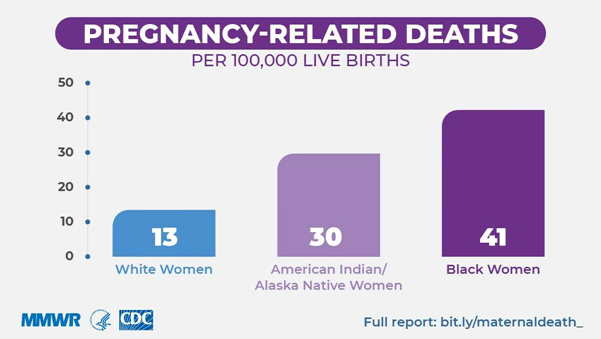
More than 2 months have passed since the death of George Floyd.  During this time, there have been efforts on an international scale to acknowledge racial injustice and reform systems which allow or encourage racism to persist.  In healthcare, data from the CDC has revealed the startling differences between the risk of dying in pregnancy faced by non-Hispanic black women in the United States when compared to all women in pregnancy.  More recently, data also from the CDC has shown that two thirds of deaths related to pregnancy were considered to be preventable.  In Canada, the story of the preventable death of Brian Sinclair, an Indigenous man who died in a hospital room, shocked the nation in 2008.  Despite more than 10 years having passed since his death, there are examples that Indigenous Peoples face inequitable access to healthcare and racism.

The CDC has recently published data received from 14 Maternal Mortality Review Committees  (MMRCs) who were able to review information related to the health and social factors that affect pregnant women.  Between 2008 and 2017, information related to the deaths of the 1,347 women who died during pregnancy or within a year of delivery was analysed. These committees found that the deaths could have been prevented in two thirds of the cases.  The percentage of deaths that were considered to be preventable did not vary significantly between women of different ethnicities.  However, the data published by the CDC in 2019 shows that the risk of dying during pregnancy or within a year of giving birth for non-Hispanic black women was 40.8 per 100,000 births, 29.7 per 100,000 births for non-Hispanic American Indian/Alaska Native women, and overall the mortality rate was 16.7 per 100,000 births.

So why is there a difference in the risk of dying between women of different ethnic backgrounds?  Research has shown that the difference may be partly related to medical conditions that ethnic minority women are more vulnerable to.  However, this biological basis is less clear as there is also a significant difference in the access to healthcare these women have and the quality of care provided is significantly lower.  These differences can influence the impact that any pre-existing medical condition or vulnerability to illness has. 

Racial discrimination may also contribute to the severity of the condition.  For example, death related to high blood pressure in pregnancy was shown in the research by the CDC to affect proportionally more black women than white women.  A study has shown that high blood pressure is more common among those of black ethnicity than white and those who have high blood pressure are more likely to have suffered racism.  Therefore, genetic differences may contribute less than discriminatory attitudes and systems.

These inequalities on the basis of race exist internationally.  Research looking at maternity care in the U.K. has shown that the rates of death faced by women during pregnancy or in the weeks after birth are five times higher for those of Black ethnic backgrounds and twice as high for those of Asian ethnic backgrounds when compared to white women.   Indigenous peoples in New Zealand and Australia face delays in accessing the lifesaving investigation and treatment of heart disease.  

The case of Brian Sinclair in 2008 highlighted the issue of healthcare inequality in Canada, where an Indigenous man with cognitive impairment was left without medical care and attention in the waiting room of an ER for 34 hours.  An interim report looking into his death, published in 2017, identified that Mr. Sinclair was ignored as a result of racism and lack of care for an Indigenous person.  Another report from 2017 reviewed cases in a Saskatoon Health Region hospital where Aboriginal women (this being the way the women described themselves) were coerced into having a surgical sterilization procedure following childbirth.  Jordan River Anderson was a First Nations child born with complex medical needs in Manitoba.  He spent more than 2 years unnecessarily in hospital awaiting a financial decision about the funding for his home care because he was a First Nations child.  He died in hospital without spending a day in his family home.

There are ongoing efforts to address racism in healthcare and physicians in Canada are encouraged to develop their understanding of the barriers faced by those of racial minority groups. There are also physician groups which advocate with and on behalf of affected communities.  There are plans to address healthcare inequalities through Jordan’s Principle and the Inuit Child First Initiative. 

The extent to which these initiatives lead to significant changes in the provision of healthcare in Canada remains uncertain. What is certain, however, is that healthcare providers are required as a matter of law, to provide all patients with safe and appropriate medical care regardless of the patient’s racial or ethnic background.  Moreover, positive steps are required to ensure that equitable treatment and care is received by those of racial minority groups.

Filed Under: Health News, Legal News, Medical Malpractice

Helping hands: how medical treatment and care is improving the long-term health of premature babies

Thursday, August 20, 2020 By Letty Condon

Preterm, or premature birth, where a baby is born before 37 weeks of pregnancy, affects around 8% of pregnancies in Canada.  There are health problems which may affect premature babies soon after birth, as they go through childhood and also as adults.  There has been significant work to help babies who are born early and this has helped reduce the chances of preterm babies being affected by long-term health conditions.

A collaborative program in Canada, involving the doctors, nurses and parents who care for premature babies, studied how implementing changes on a national level can affect the health of babies born prematurely over time.  This program encouraged communication between those caring for pregnant women facing preterm delivery and the neonatal units who look after premature babies after birth. 

What are the risks of prematurity and what can be done to improve outcomes?

Between 2004 and 2017, significant changes in medical care for babies were made and their effect was measured.  The changes that were made included giving women steroids who were about to deliver prematurely, treating premature babies with a medication called surfactant and ensuring that babies maintained an ideal temperature after birth.  The program also advised on how best to provide care to premature babies after birth, guided doctors and nurses to avoid using a ventilator if possible, gave guidance on how to support babies with their feeding and nutrition and encouraged developmental care. 

The research showed that the survival of very premature babies improved by 25% during this time and reduced the chances of premature babies being affected by:

  • bronchopulmonary dysplasia – this is a severe chronic lung disease which can make a baby born prematurely more prone to developing asthma and or suffering pneumonia later in life;
  • retinopathy of prematurity – this is a condition which affects the eyes and, in turn, can cause blindness;
  • necrotizing enterocolitis – this is a condition causing infection and inflammation of the bowel which can cause severe damage and ongoing problems with digestion, growth and development.

The effect of the environment and level of support provided to families caring for premature babies has also been shown to impact upon their health and development.  A study in Rhode Island, Providence compared babies who were cared for in an open bay to those in a single-family room and found that the premature babies cared for in a single-family room had better developmental scores between 18 months and 2 years of age.  They also found that the volume of human milk produced by the mothers who were nursing babies in a single-family room was higher.  An increased volume of human milk has been shown in other studies to impact positively upon the health of premature babies. 

The development of premature babies may be affected if they have cerebral palsy and premature babies are at an increased risk of having this condition.  As we reported recently, new research has shown that babies born prematurely to mothers who have been given magnesium sulfate shortly before birth had 30% less risk of developing cerebral palsy.  This study and the research described above show the positive impact that the care, medication and support provided to premature babies and their mothers can have. 

The timely administration of these interventions coupled with careful assessment and monitoring can make the difference between a premature baby who is able to overcome the risks of prematurity and the baby who suffers permanent health and developmental challenges that last a lifetime.   If you have questions about whether your premature baby received appropriate medical care consistent with the standard of care in Canada, feel free to contact us for a free consultation.  We are here to help.

Filed Under: Health News, Medical Malpractice

New Research on COVID-19 and Pregnancy

Wednesday, May 20, 2020 By Letty Condon

With the current global COVID-19 pandemic, pregnant women may be concerned over how the infection may affect them, their pregnancy and their baby at birth and beyond. New research from New York has looked at the impact that COVID-19 can have on pregnant women and reassuringly has shown no cases where the infection was passed from mom to baby during the pregnancy.

COVID-19 is a viral infection and can cause symptoms including cough, fever, feeling of breathlessness and loss of the sense of smell. The virus itself belongs to a family of viruses, namely the coronaviruses. Coronaviruses are responsible for infections like the common cold as well as severe diseases that have caused critical outbreaks in the past: Severe Acute Respiratory Syndrome (SARS) and Middle East Respiratory Syndrome (MERS).

There are viral infections which are known to affect pregnant women more severely because they are pregnant. There are others that can be passed from mom to baby and affect the way the baby grows and develops in the womb, and can mean that the baby is unwell after birth. The way COVID-19 affects women and unborn babies is not fully understood. The SARS and H1N1 pandemics showed that pregnant women were more vulnerable to developing serious illness when infected and women who were pregnant were more likely to die than women of the same age and health who were not pregnant. Pregnancies affected by influenza during the pandemic in 1918 were also at increased risk of premature birth and of babies dying before delivery.

Unsurprisingly, many are concerned about how pregnant women and their unborn babies may be affected during this pandemic. There has been research already published looking at pregnancy and COVID-19. The number of women that has been studied is small. Some of these studies have shown no increased risk of premature birth or complications for the baby, whereas others have found that there is an increased risk of premature birth and that both the mothers and babies are more vulnerable to becoming unwell prior to and after delivery than those without COVID-19.

The new research looked at 43 pregnant women with COVID-19 who were cared for in two New York hospitals over a 2 week period. The women looked at in this study were nearly all in their third trimester. The results found that 86% of the women with COVID-19 had mild disease, less than 10% had severe disease and 2 women (equating to less than 5%) had critical disease meaning they needed support on the Intensive Care Unit (ICU). Nearly a third of those who tested positive had no symptoms of COVID-19. Of those who delivered during this time, more than half had uncomplicated normal vaginal deliveries. All who delivered were given an epidural (or equivalent) prior to delivery and no complications were seen as a result. All babies delivered in this time had good Apgar scores and so were not struggling with their breathing or circulation in the minutes after birth. None of the babies tested positive for COVID-19

This research is still small in terms of the number of women studied. It also does not tell us how COVID-19 may affect how a baby develops early in pregnancy. It is difficult to draw conclusions about how pregnant women may be affected when compared to women who are not pregnant. The percentage of the group studied who were severely affected was similar to that in the general population but this is not a fair comparison. Pregnant women are, on average, younger and less likely to be affected by other medical conditions than the general population. Older people with other health conditions are more at risk of developing severe illness with COVID-19 infection. However, it is reassuring that the majority of women in this group either had no symptoms or had mild disease. Also, none of the babies tested positive for COVID-19 and nearly all were well during the first few days and weeks of life at which point the study was completed.

Filed Under: Health News, Medical Malpractice

« Previous Page
Next Page »

Primary Sidebar

  • Birth Injury
  • Brain Injury
  • Cerebral Palsy
  • Infant & Child Injuries
  • Spinal Cord Injuries
  • Janna Epp Bursary

Categories

  • Accessibility (24)
  • Adult Injuries (25)
  • Cerebral Palsy (62)
  • Cerebral Palsy Association of BC (26)
  • Community Involvement (31)
  • Firm News (55)
  • Health News (67)
  • Legal News (25)
  • Medical Malpractice (34)
  • People with Disabilities (29)
  • The Verdict – Law Journal (33)
  • Understanding Birth Injuries (1)

Archives

  • September 2025 (1)
  • May 2025 (1)
  • March 2025 (1)
  • November 2024 (1)
  • August 2024 (1)
  • May 2024 (2)
  • November 2023 (1)
  • September 2023 (1)
  • June 2023 (1)
  • March 2023 (1)
  • December 2022 (1)
  • September 2022 (3)
  • January 2022 (2)
  • November 2021 (1)
  • October 2021 (1)
  • August 2021 (1)
  • July 2021 (2)
  • June 2021 (4)
  • April 2021 (2)
  • March 2021 (2)
  • February 2021 (3)
  • December 2020 (1)
  • September 2020 (4)
  • August 2020 (4)
  • June 2020 (1)
  • May 2020 (2)
  • April 2020 (5)
  • March 2020 (1)
  • February 2020 (3)
  • January 2020 (4)
  • December 2019 (3)
  • October 2019 (3)
  • September 2019 (1)
  • August 2019 (3)
  • July 2019 (1)
  • June 2019 (3)
  • May 2019 (2)
  • March 2019 (2)
  • February 2019 (2)
  • January 2019 (5)
  • December 2018 (3)
  • November 2018 (3)
  • October 2018 (4)
  • September 2018 (2)
  • August 2018 (8)
  • July 2018 (8)
  • June 2018 (1)
  • April 2018 (24)
  • March 2018 (1)
  • February 2018 (4)
  • January 2018 (2)
  • July 2017 (1)
  • June 2017 (1)
  • May 2017 (1)
  • April 2017 (1)
  • March 2017 (2)
  • December 2016 (1)
  • September 2016 (1)
  • July 2016 (1)
  • June 2016 (2)
  • May 2016 (4)
  • April 2016 (1)
  • March 2016 (4)
  • February 2016 (1)
  • January 2016 (1)
  • November 2015 (1)
  • September 2015 (1)
  • August 2015 (1)
  • July 2015 (1)
  • June 2015 (3)
  • March 2015 (1)
  • February 2015 (1)
  • January 2015 (1)
  • November 2014 (1)
  • May 2014 (2)
  • December 2013 (2)
  • November 2013 (1)
  • October 2013 (3)
  • September 2013 (5)
  • August 2013 (2)
  • July 2013 (1)
  • June 2013 (7)

Recent Posts

  • Digital Scribes, Legal Signatures: AI-Generated Records in Medical Malpractice
  • Caught on Camera: The Impact of Photo and Video Evidence in Surgical Negligence Cases
  • Defining the Standard of Care: When Will a Generalist be Held to a Standard Approaching that of a Specialist?
  • The Impact of Contemporaneous Medical Records on Credibility Disputes

How Can We Help You?

Contact Us

Footer

Our Office Location

Pacific Medical Law 1030 6th Avenue West Vancouver, BC V6H 1A3
Toll Free: 1-888-333-2361 Phone: 604-685-2361 Map & Directions

Copyright © 2023 Pacific Medical Law | Website managed by DataRoots